Mini-budget continues on the austerity trajectory

By Boyce Tom
As the Treasury Ministry delivered the Medium-Term Budget Policy Statement, scores of organised working-class formations, trade unions, and left-leaning political parties gathered in front of parliament to remind the Treasury and the government at large of the forgotten promise of a better life for all. The gathering was one of many attempts by progressive civil society and grassroots organisations, all of whom shared the view that austerity budgets undermine the realisation of a better life for all.
The neoliberal-driven policy framework has entrenched inequality to the extent that poor people are getting worse off as they struggle to get basic services.
In his speech, the former trade union leader spoke about the water crisis as a problem of “poorly maintained infrastructure, high water losses and weak municipal capacity have undermined service delivery”. However, the challenge runs deeper, as the country also battles unequal distribution of water rights and the privatisation of water services. Rural villages across the country have experienced irregular access to water for extended periods, with municipalities relying on water tankers to supply rural households.
The emphasis on the private sector’s central role points to the government’s determination to privatise service delivery. This includes the hollowing out or collapse of state-owned enterprises to make way for private-sector companies to assume public service functions. The soft drink manufacturer’s involvement in delivering water tanks in Tshwane. According to media reports, Coca-Cola has partnered with the government to invest R500 million in municipal water infrastructure to stop service delivery from collapsing.
This is even though Coca-Cola is one of the major water guzzlers. During Cape Town’s severe multi-year drought between 2015 and 2018, marked by the Day Zero Campaign, Coca-Cola drew about 530 million litres of water annually from the City of Cape Town to produce soft drinks, sparkling juices, and bottled water. A litre of Coke requires about 2 litres of water to produce, according to the manufacturer’s website.
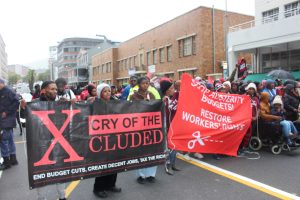
This trajectory should be worrying because, if it fully materialises, basic services will become unaffordable for poor communities. The Treasury has been silent on the housing backlog and land redistribution. Informal settlements are growing and demand basic services including water, sanitation and electricity.
These problems cannot be swept under the carpet as they demand urgent response from government. The lack of reforms in land ownership, farm evictions, and the growing reliance on self-generated means of accessing land for livelihoods should remind our government of its failed promises on land, and this promise must be honoured whenever the government addresses the nation.
The Treasury commits to local government reforms that will lead to stronger action on non-compliance. Yet, several Auditor-General reports point to the continued mishandling of public resources by municipalities without consequences. Moreover, a system that involves communities in the management of state resources must be found. Private sector investment companies continue to take over state resources such as land, water, forestry and marine resources, displacing existing rights previously enjoyed by communities.
A range of private companies are scrambling for access to communal land for extractive-driven economic activities such as mining, establishing agribusiness ventures, and gaining corporate control of marine resources. The treasury says the government will play a role in responsible stewardship of public resources, but it is well said and poorly executed. We are in a state where movements must play a significant role in defending their country’s critical resources for the benefit of the public and future generations.