Lack of access to water continues to plague communities and small-scale farmers
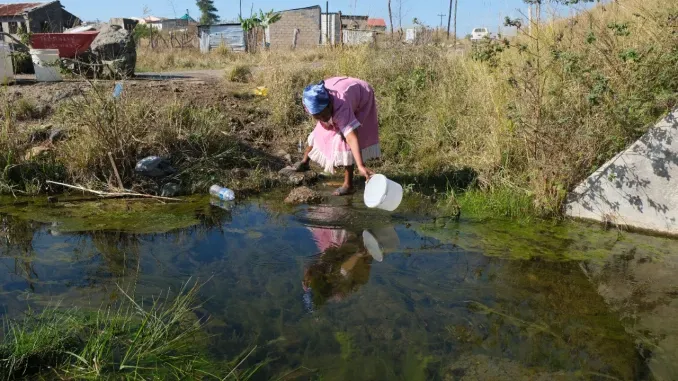
Small-scale farmers, farmworkers, and activists have vowed to continue mobilising communities to address water issues as part of a wider struggle against the water crisis gripping the country. During a hybrid speak-out held across the country, including in Limpopo, Free State, Northern Cape, Eastern Cape and Western Cape, the groups pledged to renew their commitment to hold speak-outs, conduct water testing, and engage with different spheres of government to address the crisis.
In Limpopo, the Mopani Farmers Association complained about a lack of access to water, which affects not only the Association but also residents. It has been widely reported that residents, especially women in areas such as the Vhembe District, face dry taps for months or years, forcing them to walk kilometres to bush springs or share unclean sources with animals. The Association reported that climate change contributes to the lack of access to water, as they experience frequent flash floods.
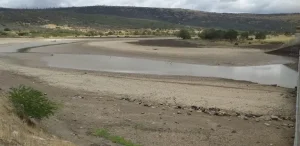
In areas of the Eastern Cape like Keiskammahoek and Middledrift, communities depend on water tankers, despite Sandile Dam being in Keiskammahoek. Residents near the dam do not have reliable water access.
In the Western Cape, farmers and communities in Zoar, a town in Kannaland Municipality, and Ashton, in Langeberg Municipality, reported struggling to access water for domestic and agricultural use.
Women bear the brunt of water crisis
Carmelitta Juries lives on a farm near Ladismith. Despite the farm dam being full, the water isn’t safe to drink without disinfection. They must use bleach to treat it first. Carmelitta says the municipality hasn’t kept its promise, so they must rely on dam water that contains frog waste.
“The municipality promised that they would put up water tanks. One tank could sustain a couple of homes. For example, 10 homes can use one tank, but to date we haven’t heard anything further,” she said.
Zoar resident Irene Isaacs said that it becomes harder for the village to access water in summer. Community members without water storage tanks must wait for municipal trucks to deliver water.
“They drive from street to street with the water tanks, which means we must go with empty buckets to fetch water so that we can show the elderly that the water point is not that far away. So, we fetch the water and bring it to the older person’s home,” she said.
Political crisis and National Water Action Plan
Dr Ferial Adams from WaterCan said the government tends to frame the water crisis as purely a climate and rainfall issue. “The deeper truth is that it is a political crisis,” she said.
Adams lambasted the National Water Action Plan, recently released by President Ramaphosa, as a move to reverse the gains made in 1994 that established water as a constitutional right.
“They have a new amendment to the Water Act. It says that if the Municipality is not doing its job, the national government can hand that function over to the private sector. We need to be aware that our water could be privatised, and it may happen soon. The entire 16-page document explains how they will bring in the private sector to fix things and hand over systems to it. I am very concerned that the very thing entrenched in our constitution may soon be no more,” she said.
Water quality, according to Adams, deteriorates the further away from cities such as Cape Town, Durban, Johannesburg and Polokwane.
Adams said that WaterCan is advocating activist citizen science, in which the community conducts tests and collects evidence for advocacy rather than waiting for the government to do so. According to Adams, the evidence can be used to open criminal cases of pollution against the municipalities and those in power.