South Africans protest xenophobia

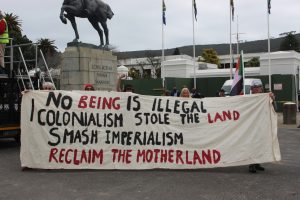
Recently, thousands took to the streets of Cape Town, Durban and Johannesburg, calling for an end to the xenophobic violence fuelled by anti-immigrant groups.
African migrants have lived in fear since the start of the current wave of xenophobic attacks.
Unlike the 2008 xenophobic violence, which left 62 people dead, 21 of whom were South Africans, the current attacks are organised. Anti-immigrant groups have set a strict June 30, 2026, deadline for undocumented foreigners to leave, threatened nationwide disruptions, and conducted aggressive door-to-door campaigns.
Led by Operation Ubuntu and the Siyafana Sonke Campaign, and backed by more than 80 civil society organisations, the protesters delivered a memorandum of demands to the South African Police Services and several government departments.
The first stop on the Cape Town protest was at the Cape Town Central Police Station, where the recently appointed provincial police commissioner, Lt Gen Sizakhele Dyantyi, received the memorandum. The protesters called for an end to the police’s xenophobia and for the arrest and prosecution of the March & March ringleaders. Outside parliament in Cape Town, protesters handed a memorandum of demands to representatives of the departments of Human Settlement, Home Affairs, and Cooperative Governance and Traditional Affairs (Cogta), as well as to the Presidency.
Xenophobic attacks were felt more in small farming towns
At the height of the violence, African immigrants in small farming towns in the Western Cape fled their homes. A few days after the 30th of June deadline, the Home Affairs Repatriation Centre in Cape Town saw a large crowd of farmworkers from the three surrounding district municipalities, the Overberg, Cape Winelands and West Coast, flock to the Epping office for processing.
Thousands of Zimbabweans and Malawians were processed in Cape Town and then bussed to Musina in Limpopo, where they had to repeat the process.
Effects of xenophobic attacks on farmers markets
Adam Mabunda of Mopani Farmers Union said that their market has been adversely affected by the xenophobic violence. According to Mabunda, Mopani Farmers Union has 12 cooperatives that send their produce to fresh produce markets in Limpopo, Tshwane, Johannesburg, Durban, Cape Town and other centres around the country, where they sell vegetables to street vendors, restaurants and supermarkets. “Most of the street vendors no longer sell on the streets due to the xenophobic attacks. Not all street vendors are foreigners; some are from different parts of Limpopo and some are from Mpumalanga, but because they cannot speak Zulu, they are scared to trade in the streets. But they are slowly regrouping and coming back to the market,” he said.
Professor Marc Wegerif from the University of Pretoria said that when farmers’ markets are not operating, consumers have to pay more because they have to buy directly from supermarkets.
Role of labour brokers in providing cheap labour for commercial farmers
Thabiso Motsira, originally from Lesotho and formerly a general farm worker in Robertson, said that the xenophobic violence and protest have cost him his job. According to Motsira, he was employed from 2018 to 2026 and is now unemployed after being told that his papers were not in order. “Now, my wife and two children in Lesotho are suffering,” said the 38-year-old.
David Motjamela, also from Lesotho, began working as a farmworker in 2016 and signed a permanent contract in 2019. He worked in the field and the storeroom. “We were called into the office, and they told us the papers were not in order,” he said. The 40-year-old father of two said he has applied to the Unemployed Insurance Fund and is awaiting the outcome.
Patrick Williams, local organiser for CSAAWU, said it is challenging to organise foreign migrants into the union because of their vulnerability, and that farmers bash and target those who join it.
“We once organised more than 200 foreign farmworkers employed through a labour broker. When the farmer learnt that the workers had joined the union, he terminated his contract with the labour broker, even though they had been working for the employer for years,” he said.
According to Williams, the labour broker phenomenon contributes to cheap labour because workers employed by a labour broker do not have rights such as the minimum wage and the Basic Conditions of Employment Act, and farmers prefer labour broker workers because they want to maximise profits.