Sentabale Farming and Development: Growing food, skills and hope through agroecology

By Lusanda Dyan
What began as a small patch of land in 2016 has grown into a thriving half-hectare community garden, creating opportunities, strengthening food security and promoting agroecology within the community
Sentabale Farming and Development was officially established in 2019 as a registered cooperative by Mlifi, Mantsha, Sherriff, Anathi and Gerald. Their vision was to address food insecurity and unemployment while creating a space for young people to learn indigenous farming knowledge passed down through generations.
The cooperative believes in agroecology and prefers heirloom seeds to genetically modified (GMO) seeds. Its aim is to grow healthy, natural food while protecting the environment and preserving traditional farming practices. The garden follows a seasonal planting schedule. At the moment, spinach is growing in the field, while tomatoes and mint are among the next crops to be planted. The team also plans to grow watermelons, pumpkins, maize, peas and beans, ensuring a wide variety of fresh produce throughout the year.
Although the garden produces food, its purpose goes beyond farming. Sentabale’s work focuses on community engagement and social justice. The organisation also addresses issues such as gender-based violence and creates safe spaces where children and young people can learn, participate and develop new skills. The garden offers young people the chance to understand where their food comes from while learning to grow food and earn their own income.
Like many community gardens, Sentabale has faced several challenges. Water remains a major obstacle, particularly during natural disasters such as fires that destroy the pipeline that carries mountain water to the garden. The cooperative also struggles with limited manpower, seasonal droughts and a lack of secure land rights.
Instead of allowing these challenges to halt their progress, the team chooses to tackle each problem in turn.
“We don’t become overwhelmed by the challenges. We identify the problem, break it down into smaller parts, and work through it. Once we solve it, the problem is resolved,” said Sherrif Ramoabi.
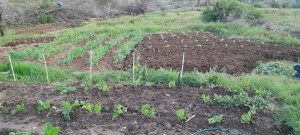
Despite limited resources, the cooperative continues to grow through what they call a “labour of love”. Much of the work is funded from their own pockets, while income from selling part of the harvest helps cover maintenance costs, including fencing and garden upkeep.
The garden has also opened doors to valuable partnerships with organisations including TCOE, the Rural Women Assembly, Mawubuye and AIDC, which provide training, workshops and travel opportunities that continue to strengthen the cooperative.
One of the garden’s greatest achievements has been joining the Rural Women’s Assembly’s Women, One Woman, One Hector campaign, which advocates for women’s access to land so they can become food producers and strengthen food sovereignty. Although the cooperative currently farms half a hectare, it hopes to secure permanent land rights, expand the project and create employment opportunities for more community members.
Their commitment to agroecology has also attracted the attention of the Agricultural Research Council (ARC), whose representatives recently visited the garden to observe their farming methods. A follow-up visit is expected in the first week of August, when the cooperative hopes to secure funding or agricultural inputs.
Looking ahead, Sentabale Farming and Development aims to strengthen the relationship among the garden, local schools and the wider community.
“We want to build a close relationship among the community, the garden and the school. We want children to experience the seasons through the garden, learn to transplant vegetable seedlings and trees, and dream beyond their current circumstances. We also want parents to be part of that journey by supporting their children’s learning,” said Ramoabi.
Through determination, community spirit and a commitment to agroecology, Sentabale Farming and Development continues to show that growing food is also about growing people, building knowledge and creating a more just and sustainable future.